Forge
Sheffield Forgemasters’ forging heritage dates back over 250 years and now has the capability to produce high-integrity steel forgings.
Our current facilities support the manufacture of hollow, solid and near-net shaped components up to 300 tonnes through advanced open-die press operations.
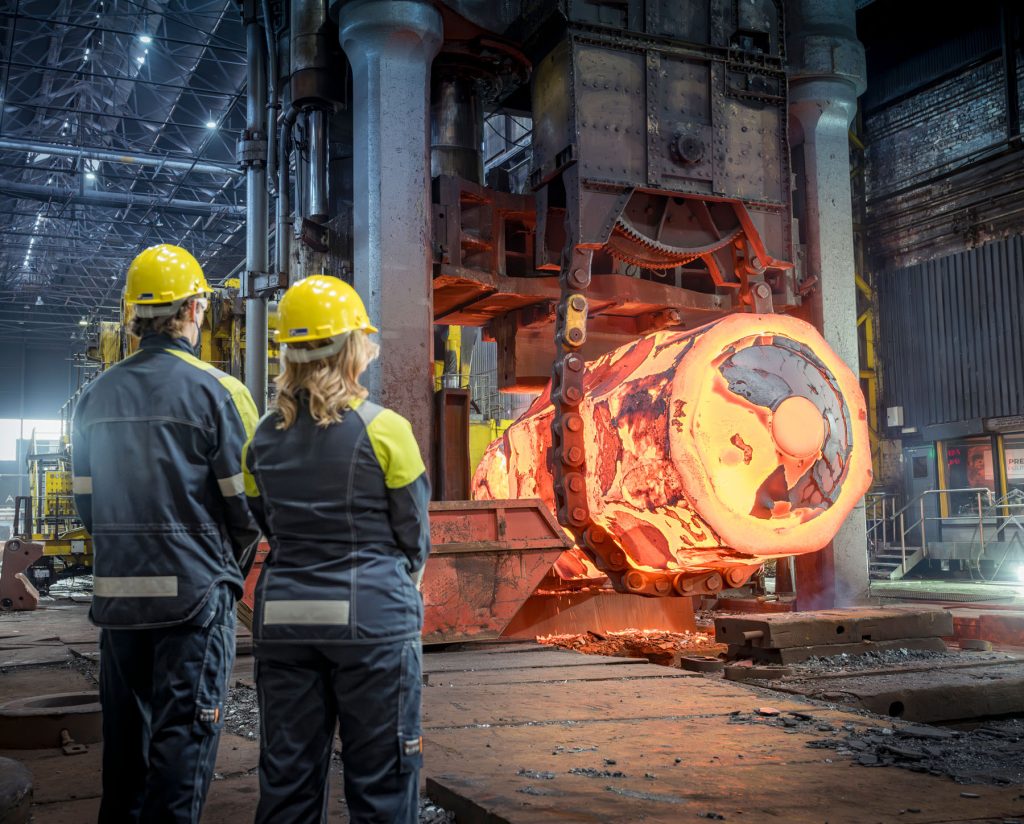
forging capabilities
Our forge includes two open-die hydraulic presses rated at 4,500 tonnes and 10,000 tonnes, giving us the scale to handle ingots up to 300 tonnes. These presses support complex shapes, long-length forgings and large-diameter sections, combining to create one of the most capable large-scale forging operations in the UK.
UK’s Largest Open-Die Press
Shafts Forged
Up To
19.8m
Forging
Ingots Up to
300t
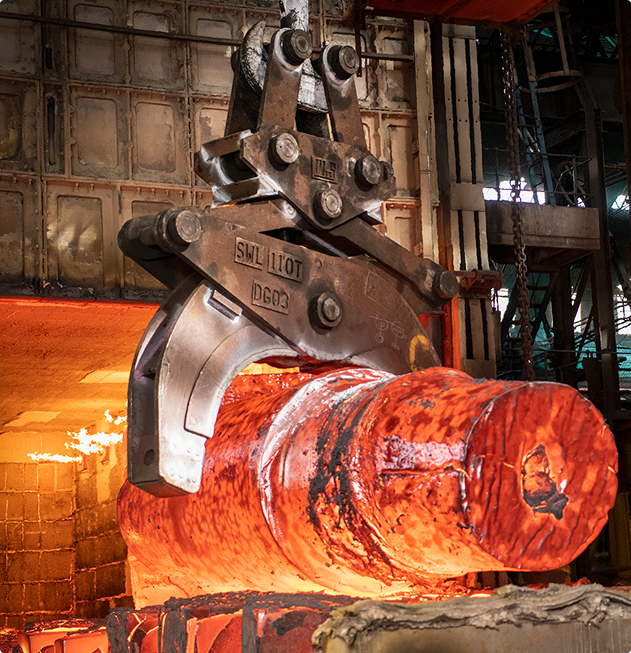
Forge furnaces
Heating steel to forging temperature is achieved through large gas-fuelled re-heat furnaces operating at around 1,250°C. Overhead cranes transfer ingots straight from furnace to press to maintain temperature consistency, and large forgings move through multiple forming and re-heating cycles to reach their final size and integrity.
Quench facilities
Our forge includes vertical oil and water quench tanks up to 20 metres deep, allowing hot components to move straight from forging or heat treatment into controlled quenching. This supports consistent hardening across large and heavy-section steelwork.
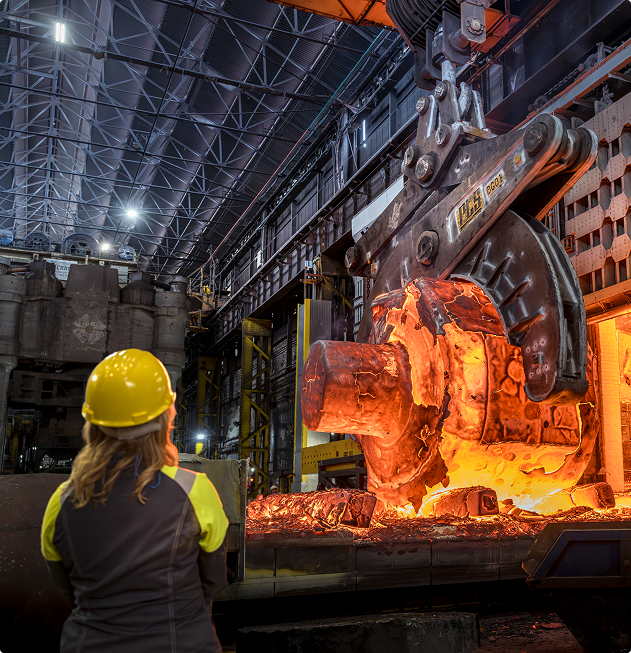
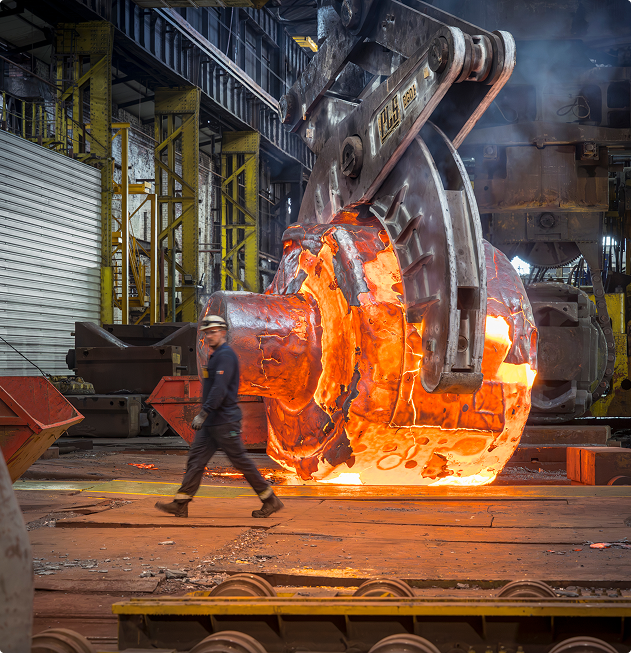
Manipulator & Cranes
Fully integrated manipulators and turning gear give operators steady, controlled movement over large steel components, allowing each piece to be rotated and positioned with accuracy as it progresses through the forging stages. This level of control is essential when working with heavy-section ingots and complex shapes. Supporting this is a high-capacity crane system capable of lifting components up to 330 tonnes, accompanied by a 120-tonne service crane for additional handling.
Discover Our Full Capabilities
Need detailed specifications? View and download our latest brochures, certification documents, and technical guides to see how we deliver the world’s most critical components.